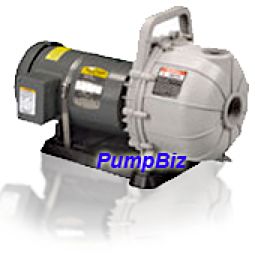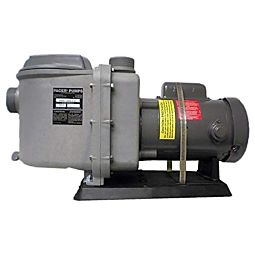
Self-Priming Pump
Self priming pumps are able to pull prime after loosing prime or in
some cases can run dry and initiate priming. Centrifugal pumps
which are called self-priming actually need to be primed the very
first time and then after should hold prime or start up again if
pump has retained its priming liquid in its volute. These pumps do
not prime from a dry condition.
The second type of Self Priming pump is a positive displacement one and can pull prime completely on its own from often a dry condition.
Self-priming pumps all have a common limit to how high they can lift or prime. This is often 25 feet maximum and with some pumps may take up to 5 minutes.
-
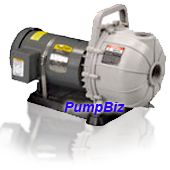
Pacer Pumps
SE11/2AL-G.10C
58-11A4-G.1.0C
$949.90S pump close coupled to a TEFC 115/230v 1 phase electric motor. Self priming FRP plastic resists abrasive particles, good for most water transfer applications, de-icing solutions like calcium chloride, fountains, irrigation and de-watering. Se...1hp ,115/230v Learn More -

Pacer Pumps
GNOK1.5/2C
60-61C4 PNC
$1,197.15The self-priming series G pump is made in Noryl, providing a maximum corrosion resistance in various water applications. Pneumatic / air motor drive. The pump comes standard with 304 stainless external hardware. The pump is protected with a ba... -
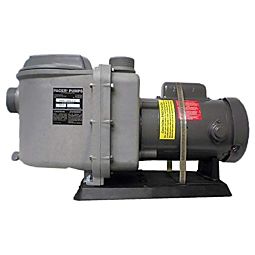
Pacer Pumps
GNOK1.5/2CLK1.0C
60-61C4K1.0C
$1,905.55The self-priming series G pump is made in Noryl, providing a maximum corrosion resistance in various water applications. Fountains, waterfalls, pools irrigation. The pump comes standard with 304 stainless external hardware. The pump is protecte...